

Colombian food is one of the most diverse and flavorful culinary traditions in Latin America. Influenced by Indigenous heritage, Spanish colonization, and African culinary practices, it offers a rich combination of ingredients, textures, and cooking techniques. From hearty soups and grilled meats to tropical fruits and freshly baked breads, Colombian ood reflects the country’s geography and cultural diversity.
In this detailed guide, we will explore the origins, popular dishes, regional specialties, ingredients, and cultural significance of Colombian food. Whether you are a food lover, traveler, or someone researching global cuisines, this article will give you a deep understanding of what makes Colombian cuisine unique.
The History and Evolution of ColombianFood
Colombian ood has evolved over centuries through the blending of multiple cultural influences.
Indigenous Roots of Colomian Food
Before the arrival of Europeans, Indigenous communities such as the Muisca, Tairona, and Quimbaya cultivated crops like maize (corn), potatoes, beans, cassava, and chili peppers. These ingredients remain central to Colombian ood today.
Corn-based dishes like arepas and tamales originate from these early civilizations and continue to be staples in modern Colombian households.
Spanish Influence on Colombian Food
When the Spanish colonized Colombia in the 16th century, they introduced livestock such as cattle, pigs, and chickens, as well as rice, wheat, garlic, and onions. These ingredients transformed local cooking methods and expanded the variety of dishes.
Many baked goods, stews, and meat-based dishes in Colombian ood today are a direct result of Spanish influence.
African Influence in ColombianFood
African slaves brought to Colombia’s Caribbean coast introduced ingredients like plantains, okra, and cooking techniques such as deep frying and slow cooking. This influence is especially visible in coastal dishes.
Key Ingredients in ColombianFood
Understanding Colombian ood begins with its core ingredients:
1. Corn (Maize)
Corn is one of the most important ingredients in Colombian cuisine. It is used to make arepas, empanadas, and tamales.
2. Potatoes
Colombia is home to hundreds of potato varieties. They are used in soups like ajiaco and as side dishes.
3. Rice
Rice is a staple in almost every Colombian meal, often served alongside beans, meat, and salad.
4. Plantains
Plantains are used in both savory and sweet dishes. They can be fried, baked, or mashed.
5. Beans and Legumes
Beans are widely consumed, especially in dishes like bandeja paisa.
6. Meat and Seafood
Beef, chicken, pork, and fish are widely used depending on the region.
Regional Diversity of Colombian Food
One of the most fascinating aspects of Colombian food is its regional diversity. The country is divided into distinct culinary zones.
Andean Region
The Andean region includes cities like Bogotá and Medellín. The food here is hearty and comforting due to the cooler climate.
Popular dishes include:
- Ajiaco (chicken and potato soup)
- Bandeja Paisa (a large platter of meat, rice, beans, and more)
- Changua (milk and egg soup)
Caribbean Coast
The Caribbean region offers bold, spicy, and tropical flavors influenced by African and Indigenous cultures.
Popular dishes include:
- Coconut rice
- Fried fish with patacones
- Sancocho de pescado (fish stew)
Pacific Coast
This region is known for seafood and coconut-based dishes.
Popular dishes include:
- Encocado de pescado (fish in coconut sauce)
- Seafood rice
- Crab stews
Amazon Region
The Amazon region uses exotic ingredients and wild game.
Popular dishes include:
- Roasted fish wrapped in leaves
- Cassava-based dishes
- Tropical fruit preparations
Orinoquía Region (Eastern Plains)
This region is known for cattle ranching and grilled meats.
Popular dishes include:
- Mamona (roast beef)
- Grilled meats
- Corn-based sides
Traditional Dishes in Colombian Food
Let’s explore some of the most iconic dishes in Colombian food culture.
Arepas: The Heart of Colombian Food
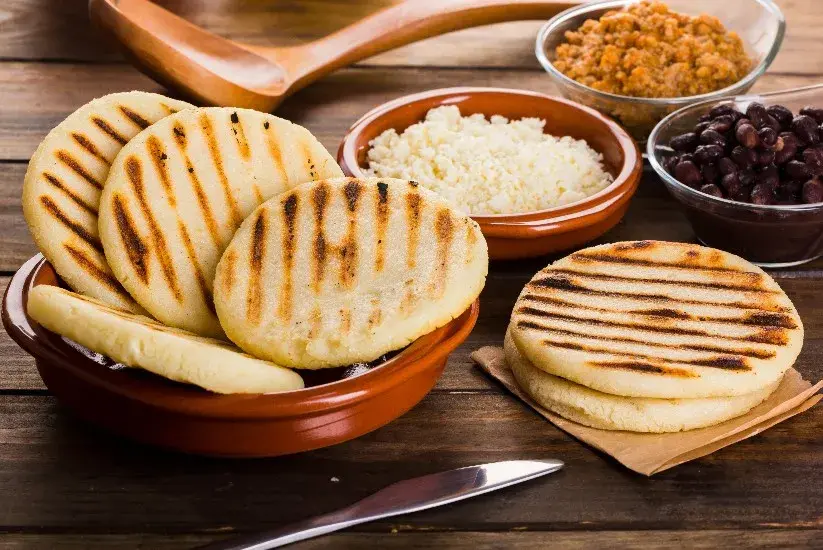
Arepas are round cornmeal cakes that are grilled, baked, or fried. They can be eaten plain or stuffed with cheese, eggs, or meat.
They are consumed daily in many Colombian households and vary by region in thickness and preparation.
Bandeja Paisa: A Symbol of Colombian Food
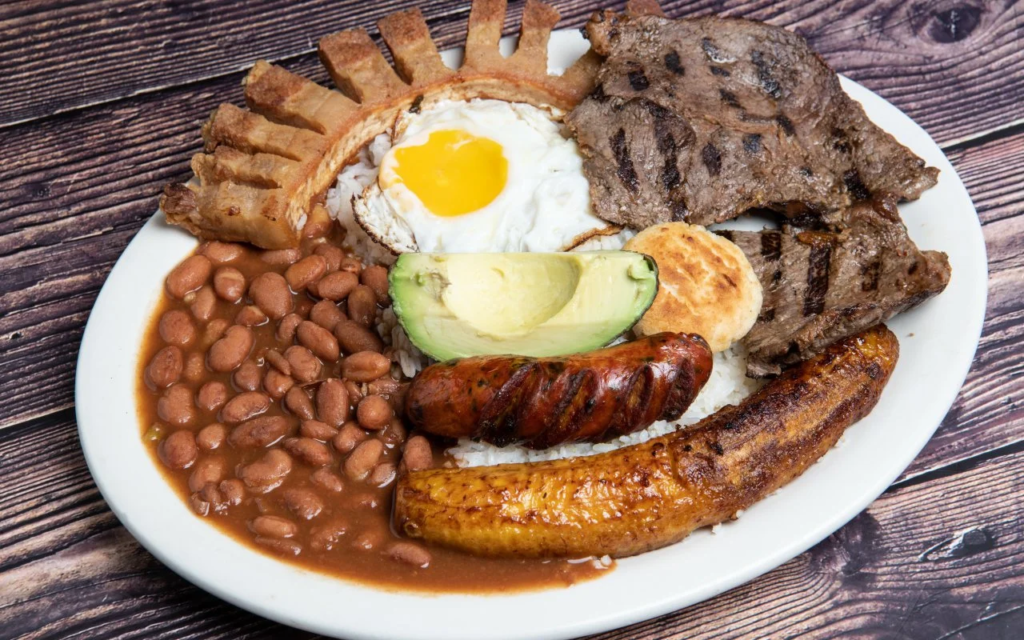
Bandeja Paisa is one of the most famous dishes in Colombian food culture. It includes:
- Rice
- Beans
- Ground beef
- Fried egg
- Chicharrón (fried pork belly)
- Plantain
- Avocado
It is known for being extremely filling and is often considered a national dish.
Ajiaco: A Traditional Colombian Soup
Ajiaco is a comforting chicken soup made with three types of potatoes, corn, and guasca herb. It is especially popular in Bogotá and represents the Andean style of Colombian food
Empanadas: A Popular Street Food
Empanadas are fried or baked pastries filled with meat, potatoes, or cheese. They are one of the most popular snacks in Colombian food culture.
Sancocho: A Hearty Colombian Stew
Sancocho is a traditional stew made with meat, plantains, yucca, corn, and potatoes. It is often prepared for family gatherings and special occasions.
Colombian Food and Street Food Culture
Street food plays a huge role in everyday Colombian life. In cities and towns, vendors sell delicious and affordable snacks.
Popular street foods include:
- Arepas with cheese
- Churros with chocolate
- Fresh fruit cups
- Buñuelos (fried dough balls)
- Pandebono (cheese bread)
Street food is an essential part of Colombian food culture, offering quick access to traditional flavors.
Colombian Food Desserts and Sweets
Colombian desserts are often sweet, creamy, and made with milk-based ingredients.
Popular Desserts:
- Arequipe (Dulce de Leche): A sweet caramel-like spread
- Natilla: A custard-like dessert often eaten during Christmas
- Bocadillo: Guava paste often paired with cheese
- Tres Leches Cake: A sponge cake soaked in three types of milk
These desserts show the sweet side of Colombian food culture.
Drinks in Colombian Food Culture
Colombia also has a rich tradition of beverages.
Coffee
Colombian coffee is world-famous for its smooth, rich flavor. It is one of the country’s biggest exports and a central part of daily life.
Hot Chocolate
Often served with cheese, hot chocolate is a popular breakfast drink.
Fresh Juices
Colombia is known for its exotic fruit juices made from mango, guava, passion fruit, and lulo.
Aguardiente
A traditional alcoholic drink flavored with anise, often consumed during celebrations.
Colombian Food in Modern Times
Today, Colombian food is gaining global recognition. Chefs are modernizing traditional recipes while preserving cultural authenticity. Restaurants around the world now serve arepas, empanadas, and bandeja paisa.
Fusion cuisine is also becoming popular, combining Colombian food with international flavors.
Health Aspects of Colombian Food
Colombian food can be both healthy and indulgent depending on preparation.
Healthy Aspects:
- Fresh fruits and vegetables
- Lean proteins like chicken and fish
- Natural cooking methods
Less Healthy Aspects:
- Fried foods like empanadas and plantains
- High carbohydrate meals
- Heavy meat portions in some dishes
Balance is key when enjoying Colombian food.
Cultural Importance of Colombian Food
Food in Colombia is not just about eating—it is about community, tradition, and celebration.
Meals are often shared with family and friends, and special dishes are prepared during festivals, holidays, and gatherings.
Colombian food represents hospitality and warmth, reflecting the country’s cultural identity.
Why Colombian Food is Gaining Global Popularity
There are several reasons why Colombian food is becoming more popular worldwide:
- Unique combination of flavors
- Use of fresh, natural ingredients
- Growing Latin American food trend
- Increased tourism to Colombia
- Influence of Colombian chefs abroad
How to Experience Authentic Colombian Food
If you want to experience real Colombian food, here are some tips:
- Visit local Colombian restaurants
- Try street food vendors
- Explore regional dishes when traveling in Colombia
- Learn to cook simple dishes like arepas at home
Conclusion
Colombian food is a vibrant and diverse culinary tradition shaped by centuries of cultural fusion. From hearty soups like ajiaco to iconic dishes like bandeja paisa and simple snacks like arepas, Colombian cuisine offers something for every taste.
Its regional diversity, rich history, and cultural significance make it one of the most interesting food cultures in the world. Whether you are exploring it for travel, cooking, or curiosity, Colombian food is a delicious journey worth experiencing.
