

The internet works because millions of devices communicate with each other every second. Behind every website, mobile phone, smart device, server, and online platform lies a system that makes digital communication possible. One of the most important parts of this system is the IP address.
Recently, many users have searched for the keyword “111.90.150.1888” online. Some people encounter this number in server logs, browser records, internet configuration settings, online discussions, or network troubleshooting reports. Others become curious after seeing the keyword appear in search engine results or analytics tools.
Although “111.90.150.1888” may look like a standard IP address, it does not follow the traditional IPv4 formatting rules because one section exceeds the accepted numerical range. Even so, the keyword has gained attention online and is frequently discussed in relation to networking, cybersecurity, proxies, hosting systems, online privacy, and internet tracking.
This detailed guide explains the meaning behind 111.90.150.1888, how IP addresses function, the reasons people search for this keyword, common misconceptions, internet security concerns, and the role of network identifiers in the modern digital world.
What Is 111.90.150.1888?
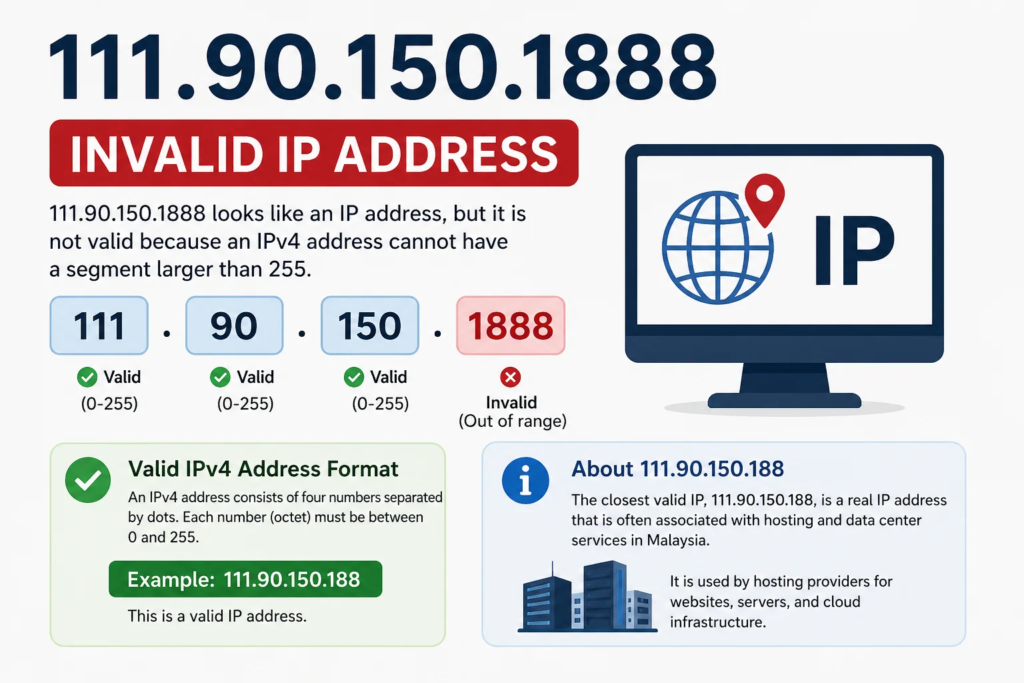
The keyword “111.90.150.1888” resembles an IPv4 address format. A standard IPv4 address contains four numerical sections separated by periods. Each section, also called an octet, must range between 0 and 255.
Example of a valid IPv4 address:
- 192.168.1.1
- 8.8.8.8
- 111.90.150.188
However, in the keyword “111.90.150.1888,” the last number is 1888, which exceeds the allowed IPv4 limit.
Because of this formatting issue, 111.90.150.1888 is not considered a valid public IPv4 address. Despite that, the keyword still appears in:
- Search engine queries
- Network monitoring tools
- Proxy discussions
- Cybersecurity forums
- Hosting-related content
- Error logs
- Typographical search entries
Many users search for 111.90.150.1888 because they want to understand whether it represents:
- A server
- A proxy address
- A hosting provider
- A suspicious connection
- Malware activity
- A tracking system
- A technical error
Understanding how IP systems work helps explain why such keywords gain attention online.
Understanding How IP Addresses Work
To fully understand 111.90.150.1888, it is important to learn how internet addresses operate.
What Is an IP Address?
An IP address, or Internet Protocol address, is a unique identifier assigned to devices connected to a network. It helps devices communicate with websites, servers, and online services.
Without IP addresses, the internet would not function properly.
Every device connected to the internet usually has:
- A public IP address
- A local/private IP address
- Network routing information
IP addresses allow:
- Data transfer
- Website access
- Device recognition
- Online communication
- Geographic routing
- Security monitoring
IPv4 vs IPv6
There are two primary internet addressing systems:
IPv4
IPv4 uses four numerical sections.
Example:
- 123.45.67.89
IPv4 remains widely used because of compatibility and legacy systems.
IPv6
IPv6 was created to support more devices.
Example:
- 2001:0db8:85a3:0000:0000:8a2e:0370:7334
IPv6 provides:
- Larger address space
- Better scalability
- Improved routing efficiency
- Enhanced future compatibility
The keyword 111.90.150.1888 resembles IPv4 formatting, which is why users often mistake it for a real address.
Why Is 111.90.150.1888 Trending Online?
Several factors contribute to the growing online interest in 111.90.150.1888.
Search Engine Curiosity
Users frequently search unusual numerical patterns after seeing them in:
- Browser histories
- Website analytics
- Error pages
- Spam logs
- Proxy lists
- Security alerts
This naturally increases search engine visibility.
Typographical Errors
Many searches involving 111.90.150.1888 may result from typing mistakes.
For example, users might accidentally enter:
- 111.90.150.188 instead of 111.90.150.1888
- Incorrect server numbers
- Extra digits in configuration files
Small typing errors can generate large search volumes over time.
Cybersecurity Discussions
Network administrators and cybersecurity professionals often investigate unfamiliar addresses. When unusual numeric patterns appear in logs, users search online for answers.
This may lead to increased interest in 111.90.150.1888.
Proxy and Hosting Searches
Some users associate keywords like 111.90.150.1888 with:
- Proxy services
- Hosting systems
- VPN networks
- Remote servers
- Anonymous browsing
As online privacy concerns grow, internet users search for technical identifiers more frequently.
Is 111.90.150.1888 a Real IP Address?
Technically, 111.90.150.1888 is not a valid IPv4 address because the last octet exceeds the allowed range.
IPv4 Number Rules
Each section in IPv4 must remain between:
- 0 and 255
Examples of valid addresses:
- 111.90.150.188
- 10.0.0.1
- 172.16.0.1
Invalid examples:
- 111.90.150.1888
- 999.999.999.999
- 300.0.0.1
Because of this limitation, systems generally reject invalid IP entries.
Why Invalid Addresses Still Appear
Invalid IP-like keywords appear online because of:
- Human typing errors
- Spam data
- Fake logs
- Test environments
- Software bugs
- Bot-generated traffic
- Misconfigured systems
Search engines index these terms if enough users search for them.
111.90.150.1888 and Internet Security
Online security is one of the biggest reasons users investigate unusual IP-related keywords.
Security Monitoring
Network administrators monitor internet traffic to detect:
- Unauthorized access
- Malware activity
- DDoS attacks
- Spam requests
- Suspicious login attempts
When unfamiliar numerical patterns appear, administrators often search for more information.
Threat Intelligence
Cybersecurity teams collect threat intelligence from:
- Server logs
- Traffic analysis
- Firewall systems
- Intrusion detection platforms
- Network scanners
Although 111.90.150.1888 may not be a valid IP, unusual entries can still trigger investigations.
Fake or Obfuscated Data
Some attackers intentionally use misleading identifiers to confuse tracking systems.
This may include:
- Invalid addresses
- Fake domains
- Randomized network entries
- Spoofed headers
As a result, security professionals carefully analyze suspicious patterns.
How to Check an IP Address Safely
If users encounter unfamiliar addresses, they should follow safe verification methods.
Use Trusted Lookup Tools
Reliable IP lookup platforms provide:
- Geographic data
- ISP information
- Hosting provider details
- Abuse reports
- Security reputation scores
Avoid Unknown Websites
Never enter sensitive information into untrusted IP-checking websites.
Always use:
- Reputable cybersecurity services
- Trusted network tools
- Verified DNS providers
Check Formatting
Before investigating further, verify whether the address follows proper formatting rules.
In the case of 111.90.150.1888, the formatting itself reveals that it is not a standard IPv4 address.
Common Reasons People Search for 111.90.150.1888
Different users search for this keyword for different reasons.
Technical Troubleshooting
System administrators may search the keyword after seeing it in:
- Error reports
- Server logs
- DNS configurations
- Network routing records
Online Privacy Research
Privacy-conscious users often investigate IP-related keywords to understand:
- Tracking systems
- VPN activity
- Anonymous browsing
- Proxy servers
Educational Purposes
Students learning networking concepts sometimes search unusual IP patterns to:
- Understand formatting rules
- Learn subnetting
- Practice validation
- Study cybersecurity
Traffic Analysis
Website owners may notice strange traffic entries in analytics dashboards and search for unfamiliar identifiers.
111.90.150.1888 in Networking Discussions
Networking communities frequently discuss unusual addresses and invalid entries.
Importance of Accurate Addressing
Incorrect IP entries can create:
- Routing failures
- Server communication errors
- DNS problems
- Security alerts
Accurate formatting is essential for stable internet communication.
Network Validation Systems
Modern systems automatically validate addresses before processing them.
Validation checks include:
- Numerical ranges
- Formatting structure
- Address type recognition
- Protocol compatibility
Since 111.90.150.1888 does not meet IPv4 standards, many systems reject it automatically.
The Role of IP Addresses in and Analytics
Many digital marketers encounter IP-related data while managing websites.
Website Analytics
Analytics platforms collect visitor information such as:
- Geographic regions
- Device types
- Traffic sources
- Browsing behavior
Although personal privacy laws limit certain tracking methods, IP-related analysis still helps website optimization.
Bot Traffic Detection
professionals monitor unusual traffic patterns to detect:
- Spam bots
- Fake visits
- Automated scraping
- Invalid requests
Suspicious IP entries may appear in reports, leading to additional searches.
Server Performance Monitoring
Hosting companies track incoming connections to improve:
- Server stability
- Website speed
- Security performance
- Load balancing
111.90.150.1888 and Proxy Servers
Some users associate unusual numeric strings with proxy systems.
What Is a Proxy Server?
A proxy server acts as an intermediary between users and websites.
Benefits include:
- Privacy protection
- Content filtering
- Traffic management
- Anonymous browsing
Risks of Untrusted Proxies
Using unknown proxy services can expose users to:
- Data theft
- Malware
- Tracking systems
- Security vulnerabilities
Users should only trust reputable services.
Understanding Server Logs and Invalid Entries
Server logs record activity on websites and networks.
Why Invalid Entries Appear
Invalid entries can appear because of:
- Automated bots
- Malicious scripts
- Broken software
- Typing errors
- Corrupted requests
Administrators review these logs regularly.
Importance of Log Monitoring
Monitoring logs helps organizations:
- Detect threats
- Improve performance
- Prevent downtime
- Analyze traffic
Keywords like 111.90.150.1888 sometimes gain visibility through log analysis discussions.
Cybersecurity Best Practices
Understanding unusual network-related keywords also highlights the importance of online safety.
Use Strong Passwords
Always create passwords that include:
- Uppercase letters
- Lowercase letters
- Numbers
- Special characters
Enable Multi-Factor Authentication
MFA adds extra security layers for:
- Email accounts
- Banking platforms
- Social media
- Hosting dashboards
Update Software Regularly
Outdated systems increase cybersecurity risks.
Keep updated:
- Browsers
- Operating systems
- Firewalls
- Antivirus software
Monitor Suspicious Activity
Investigate unfamiliar network behavior quickly.
Warning signs include:
- Unusual login attempts
- Unknown traffic spikes
- Unexpected server requests
- Repeated failed access attempts
How Internet Infrastructure Depends on IP Systems
The modern internet depends heavily on addressing systems.
Routing Data Across the Internet
Routers use IP information to:
- Deliver data packets
- Connect servers
- Manage traffic
- Optimize communication
Without structured addressing, global internet communication would fail.
Cloud Computing and IP Management
Cloud platforms rely on advanced networking systems.
These include:
- Dynamic addressing
- Load balancing
- Virtual servers
- CDN routing
Proper IP management improves:
- Website speed
- Reliability
- Scalability
Misconceptions About 111.90.150.1888
There are many misconceptions surrounding unusual internet keywords.
Myth 1: Every IP-Like Number Is Real
Not all numerical patterns represent valid internet addresses.
Myth 2: Invalid Addresses Are Always Dangerous
Some invalid entries result from harmless mistakes.
Myth 3: Searching an IP Automatically Reveals Identity
IP addresses provide limited information and do not directly expose personal identities.
Myth 4: Every Unknown Address Is Malware
Suspicious-looking entries are not always malicious.
Proper investigation is necessary.
How Businesses Handle Network Monitoring
Companies use advanced tools to protect digital systems.
Enterprise Security Systems
Businesses rely on:
- Firewalls
- SIEM platforms
- Threat detection software
- Endpoint protection
Real-Time Monitoring
Modern cybersecurity systems monitor:
- Incoming traffic
- Outgoing connections
- Server behavior
- Login activity
Data Protection Strategies
Organizations secure sensitive information using:
- Encryption
- Access controls
- Secure hosting
- Network segmentation
Educational Importance of Keywords Like 111.90.150.1888
Even invalid IP-like keywords can help people learn important networking concepts.
Learning IPv4 Structure
Students studying networking learn:
- Address ranges
- Subnet masks
- Routing methods
- Protocol standards
Practical Cybersecurity Awareness
Understanding invalid entries improves:
- Threat recognition
- Network troubleshooting
- Security awareness
- Technical literacy
Search Behavior Analysis
specialists analyze unusual keywords to understand:
- User curiosity
- Search intent
- Traffic behavior
- Online trends
Future of Internet Addressing
Internet infrastructure continues evolving rapidly.
Growth of IPv6
As internet-connected devices increase, IPv6 adoption grows.
Benefits include:
- More available addresses
- Better scalability
- Improved efficiency
- Long-term sustainability
AI and Network Security
Artificial intelligence now helps detect:
- Network anomalies
- Suspicious activity
- Cyber threats
- Automated attacks
Expanding Digital Ecosystems
Emerging technologies rely heavily on stable networking.
Examples include:
- Smart homes
- IoT devices
- Autonomous systems
- Cloud computing
- Edge computing
Importance of Technical Keywords
Technical keywords often generate strong search traffic because users seek quick explanations.
Why Users Search Technical Terms
People search unusual keywords to:
- Solve problems
- Understand errors
- Investigate security issues
- Learn technical concepts
Low Competition Opportunities
Rare technical keywords sometimes provide:
- Lower competition
- Faster ranking potential
- Niche traffic opportunities
Content Optimization Strategies
To optimize technical articles:
- Use clear headings
- Add readable explanations
- Include relevant terminology
- Improve user engagement
- Maintain natural keyword usage
Frequently Asked Questions About 111.90.150.1888
Is 111.90.150.1888 a valid IP address?
No. The last section exceeds the allowed IPv4 range.
Why do people search for 111.90.150.1888?
Users may encounter it in logs, analytics, technical discussions, or typing mistakes.
Can invalid IP addresses be harmful?
Invalid entries themselves are not necessarily harmful, but suspicious network activity should always be investigated.
What is the difference between IPv4 and IPv6?
IPv4 uses four numerical sections, while IPv6 uses a larger hexadecimal format.
Can IP addresses identify a person?
IP addresses generally identify network connections, not exact personal identities.
Final Thoughts on 111.90.150.1888
The keyword “111.90.150.1888” has attracted attention because it resembles a standard internet address while containing formatting inconsistencies. Although it is not a valid IPv4 address, the term continues appearing in online searches, server discussions, cybersecurity topics, analytics reports, and networking conversations.
Understanding why people search for keywords like 111.90.150.1888 helps improve digital literacy and technical awareness. It also highlights the importance of proper IP validation, online security practices, accurate network monitoring, and safe browsing habits.
As internet technologies continue evolving, networking knowledge becomes increasingly valuable for businesses, developers, cybersecurity professionals, students, and everyday users. Whether the keyword appears in logs, search trends, or educational discussions, it serves as an example of how curiosity about internet infrastructure drives online learning.
By understanding the fundamentals of IP addresses, cybersecurity, hosting systems, and digital communication, users can better navigate the modern internet landscape while protecting their online privacy and security.
